

A Māori Economy
Fit for the Future

Unlocking the potential of the Māori economy to strengthen wellbeing for generations to come.

MĀORI CAPITAL ACCESS
Why access to capital matters — the case for acceleration.
The Māori economy is growing from a position of genuine strength. By 2025, iwi and Māori collective assets had reached $129 billion, growing at 11% annually – outpacing the wider New Zealand economy. Māori GDP stood at $32 billion, with Māori enterprises contributing more than 220,000 jobs.
But the gap between where the Māori economy is and where it could be remains large – and closing it matters not only for Māori but for New Zealand. Two successive Ngao-tu, Ngao-pae reports make this case directly. Under an accelerated pathway to 2040, Māori GDP could reach $60–64 billion – roughly doubling its current size – while Māori economic assets could lift toward $220 billion. Ngao-tu, Ngao-pae 2.0 puts the annual cost of low Māori wellbeing at around $10 billion. Acceleration is not a growth strategy alone. It is a high-return social investment.
The constraint holding back acceleration is not willingness. It is not capability. It is system design. Capital exists but does not always connect in ways that fit collective ownership structures. Opportunities are real but frequently too fragmented or sub-scale to attract institutional capital. Financial products designed for conventional ownership models do not serve whenua Māori, intergenerational trusts, or pooled iwi capital. That is the market failure at the centre of the problem – and it is the problem Rauawa was built to address.
June
2026
June
2026
Dec
2023
RAUAWA
A kaitiaki for Māori access to capital.
In 2022, the Reserve Bank of New Zealand did something ground-breaking. It consulted publicly on whether the financial system itself was a barrier to Māori access to capital. The question was pointed.
The answer was clear: yes, across every layer of the financial and capital markets.
That finding set something in motion. The RBNZ issued a call to action, and a working group took shape – bringing in the banking sector, NZ Treasury, key government agencies, and the National Iwi Chairs Forum (NICF) through its economic governance body, Pou Tahua.
The focus was system-level. Not a specific fund, not a one off initiative, but a sustained, structural approach to improving capital access for iwi and Māori katoa.
Through that engagement, NICF concluded that what was needed was a financial intermediary with its own mandate, operational independence, and an all-of-iwi kaupapa to harness the collective scale of the Māori economy, unlock new capital solutions, and drive system change for the long term. Not a government programme, not an iwi fund manager but something different - a kaitiaki for Māori access to capital - driving a collective and intergenerational perspective in government policy, financial services innovation and the regulation of capital markets.


Rauawa was established in 2023 as a charitable trust, governed by directors appointed by NICF.

MĀORI-LED FINANCIAL INTERMEDIARY
Rauawa is not ‘and-or’, but ‘and-and’.
Rauawa is a Māori-led financial intermediary, designed to act agnostically in the interests of all iwi and Māori, not just those with the scale to go it alone. It represents the beginning of a deliberate, decade-long journey toward what the original Ngao-tu, Ngao-pae report described as intergenerational independence – mana motuhake and rangatiratanga – grounded in a stronger, more connected Māori economy, supporting the growth of collective assets owned by iwi and Māori, and importantly, ensuring that capital flows to where the wellbeing need is greatest.
Its mandate flows from NICF, representing 88+ iwi across Aotearoa. All four directors are NICF appointed. Its purpose is systemic: to convert the real, measurable value that iwi and mana whenua create in the economy – building a pathway toward a Māori Wealth Fund to eliminate dependency on government funding – mana motuhake.
Its three core commitments are:
A relentless focus on system transformation in capital markets
Empowering Māori participation and ownership across the financial system
Ultimately, contributing to the elimination of the life expectancy and wellbeing gap between Māori and non-Māori.

Rauawa is neither an exclusive channel for capital flows, nor a replacement for direct iwi and Māori collective investment.
It is an amplifier. Each iwi and entity decides whether and how it participates.
Collective scale, individual rangatiratanga.

SHARED WORK PROGRAMME
A Crown-Māori partnership around durable infrastructure ownership.
Rauawa is not an iwi investor itself, but rather an aggregation and structuring layer that enables iwi and Māori collective investment to work at a national scale.
In response to current government priorities, Rauawa is developing within its organisational structure a dedicated business unit to build the pathway toward a Māori Investment Fund and, ultimately, a Māori Wealth Fund – NICF-Pou Tahua shared work programme focused on infrastructure development, particularly in energy, water, and social infrastructure – where the scale of New Zealand’s investment pipeline and iwi’s long-horizon capital and mana whenua kaitiaki interests converge most powerfully.
Our role in durable infrastructure ownership for iwi and Māori collective entities is to:
Structure participation into commercially viable, probity-safe pathways, including hybrid concession models that combine contracted government revenue (e.g., a Crown PPA) with merchant upside.
Identify and develop project pipeline at the nexus of iwi and Māori collective land and resource interests, government infrastructure needs, and private developer capabilities.
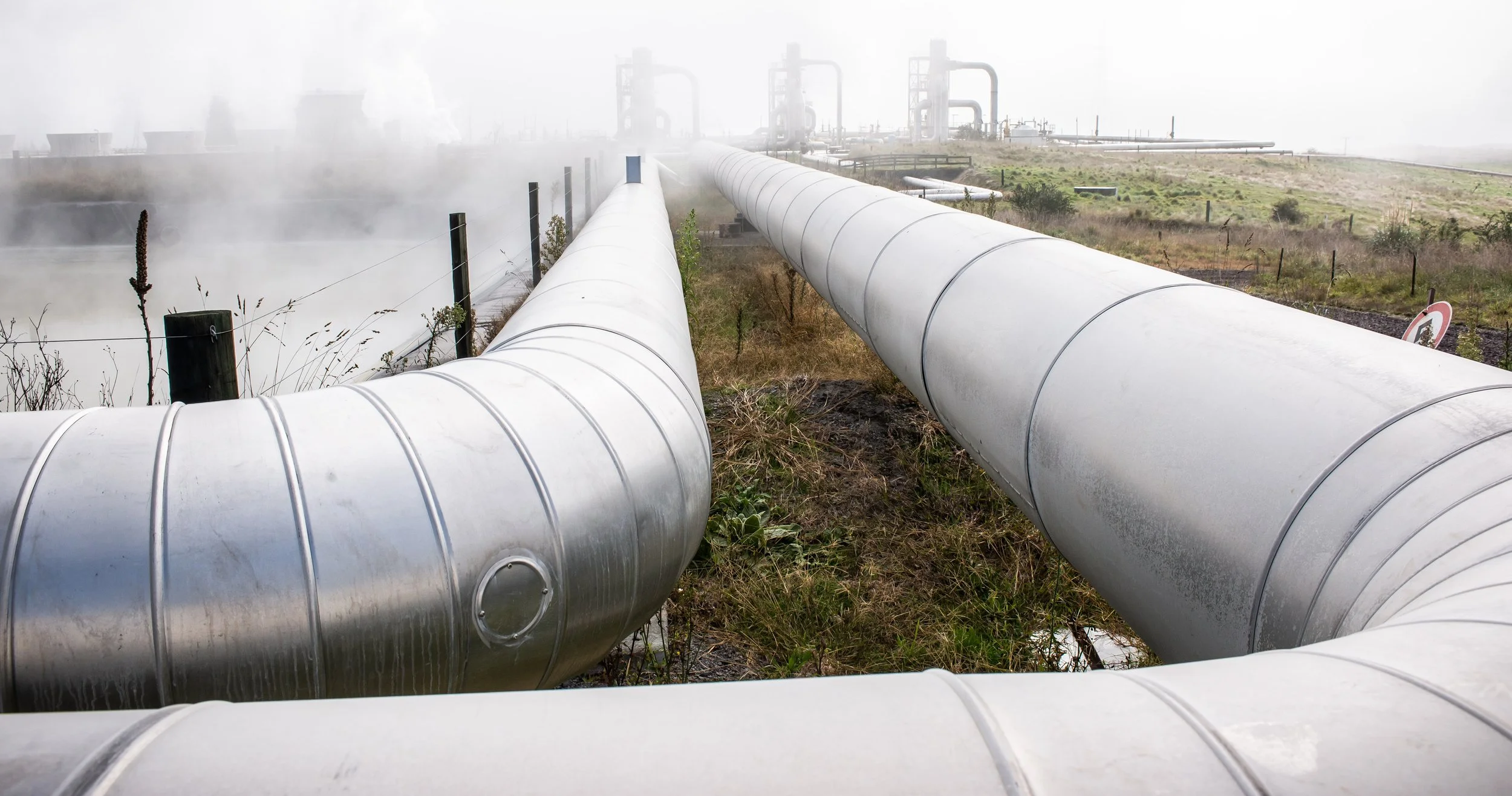

Aggregate capital and mandates so that sub-scale iwi capacity can reach the institutional equity thresholds that large infrastructure projects require.
Reduce transaction friction for the Crown and developers, replacing one-to-many negotiations with a single, mandated aggregation interface.

GET INVOLVED
Mana Motuhake ma roto i te Kotahitanga
Rauawa is looking to engage with iwi leaders, government officials, infrastructure developers, domestic and international investors, and finance sector partners who are serious about the next chapter of Māori economic participation in New Zealand.
